
The Defeat and Attrition Of The 12. SS-PanzerDivision HitlerJugend
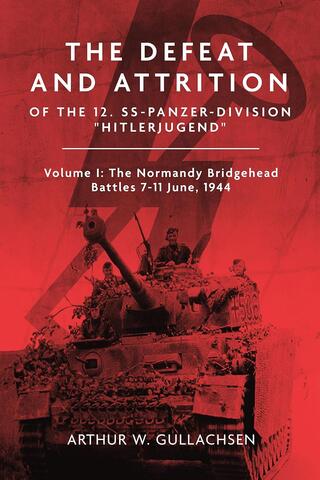
Readers of this website may recognize the name Gullachsen. I previously recommended his two-volume set on the I. SS PanzerKorps Defense of the Verrieres and Bourguebus ridges during the Normandy Campaign that kicked off with the Allied D-Day invasion of 6 June, 1944. The Defeat and Attrition Of The 12. SS-PanzerDivision HitlerJugend is meant to be the first of two new books further exploring the armor-heavy battles on the eastern end of the Allied lodgement in Normany. The focus here is specifically on the 12. SS-PanzerDivision. This was a well-built, well-trained fighting formation which was meant to be one of the key units fighting as part of Heersgruppe B (under German Generalfeldmarschall Erwin Rommel). Its primary objective was to be massed with other panzer divisions to destroy the Allied bridgehead in Normandy.
In actuality that goal would even come to being met by the 12. SS PanzerDivision or any of its other peer armored divisions. This book explains why in exacting and fascinating detail. The book focuses on the initial 7-11 June 1944 deployment of the 12. SS-Panzer-Division against the lead formations of what would become the Second British Army. As Gullachsen amply demonstrates it was not just German decision-making that led to Nazi failure, but Allied defensive efforts built around a sound doctrine for defeating German attacks. German doctrine for employing panzer divisions revolved aorund the utmost fidelity to key battlefield operating concepts like combined arms and concentrated force if it were to be successful. The book explains how it was the German leadership failed to not only meet its doctrinal precepts for deploying its panzer divisions, but also why the 12. SS PanzerDivision was also ill-suited to the grinding defensive fight it which it found itself shortly after arriving in Normandy.
The Defeat and Attrition Of The 12. SS-PanzerDivision HitlerJugend covers in detail notable clashes that occured between the 12. SS PanzerDivision and its primarily Canadian opponents in the days immediately following D-Day and in the eastern sector of the Allied bridgehead. Though notable these are not well known battles. Even those familiar with events in Normandy during June of 1944 will find much of interest in these pages. The book further examines events on D-Day itself, and how German and Anglo-Canadian tactical doctrine influenced battlefield outcomes. One of the key takeaways from these pages is a greater appreciation for Anglo-Canadian defensive fighting capabilities. This book thus serves as a sound corrective to those who continue to mistakenly denigrate the Anglo-Canadian formations deployed in Normandy as being the least effective of the respective armies that met there in battle during the summer of 1944. Furthermore, and in reassessing German decision-making the book does not shy away from the more odious aspects of the 12. SS-Panzer Division - featuring detailed discussion of its numerous war crimes committed during these days. Based upon what I have read so far I eagerly await the second volume in this series, and recommend this book.


Post new comment