
The Fights On The Little Horn
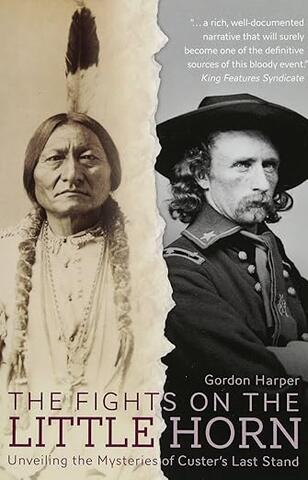
It might seem odd to find at this website a book review focused on a publication exploring the Native American defeat of U.S. Army Lt. Col. George Armstrong Custer's 7th Cavalry Regiment on June 25, 1876 at the Battle of The Little Big Horn. Yet, over the years I have developed a strong interest in both the Battle of The Little Big Horn and the equally compelling 1879 Battle at Isandlwana. As such, anytime a book about those topics comes along that I feel is more than worth my dear reader's valuable time I want people to know about it. This is exactly that kind of book.
In terms of the Battle of The Little Big Horn I have long thought one of the best books anyone could read on the subject is Richard Allan Fox Jr.'s Archeology, History, and Custer's Last Battle. I believe Gordon Harper's work here is, though different, equally superb. The strength of Harper's work, is like Fox Jr.'s in the depth of his research and the well-informed analysis produced by that research.
Gordon Harper spent more time than just about anyone in the past 150 years not just researching Custer's final battle but exploring the battlefield and digging deep into every piece of evidence he could find. To that end, he amply mined Native American sources as well as the records produced by the U.S. Army and the numerous mostly century old interviews with survivors of the battle. Though Harper passed away before he completed this book, it was mostly finished. In a touching development the manuscript was able to be published in 2014 through the efforts of his daughter Tori Harper and Gordon Harper's friends and co-researchers Monte Akers and Gordon Richard. One can only hope to be as blessed a Gordon Harper to have not only such a passion driving his life, but a child and friends full of such respect and love for him to see to it that his greatest contribution to our understanding of one of the Old West's most important events was brought to life.
Gordon's work is not just an analysis of the battle, but also does an excellent job of debunking many of the myths that have sprung up around the battle. He does such a good job I was wishing the book wouldn't end and there would have been more pages granted to his doutblessly ably researched opinion on even more controversies surrounding the battle. It is my opinion that after reading this book, one will have a much more nuanced view of Custer and his decision-making. In fact, it seems to be clear in examining Custer's actions without the benefit of hindsight (as the analysis in these pages repeatedly does), that one takeaway a reader will have is (in a military sense) he largely performed about as well as could be expected in those circumstances while doing so within the scope of his orders.
Conversely, the book reinforces an increasing conventional wisdom regarding the mixed performance of Reno and Benteen in command of their respective battalions. Furthermore, Harper takes time to examine the capabilities and experience of the 7th Cavalry's rank and file - finding them to be generally experienced Indian fighters and veteran horsemen. Speaking of excellent horsemen, Indian accounts feature heavily in the text - adding much to fleshing out Gordon's analysis.
To that last point, forensic analysis plays an equally important role in this work, being of particular importance in explaining how the battle unfolded and the work of the burial teams and mapping of the locations where the men of Custer's command last fell. If you have any interest in the Battle of the Little Big Horn, then I cannot recommend this book enough.


Post new comment