Skip directly to content

Welcome!


Order at: Amazon & Barnes & Noble

Thoughtful contributions to the Globe at War are not just welcomed, but encouraged, including via; a community generated articles page, book and other media reviews, and much more. The Globe at War offers ample opportunities to learn about World War I, World War II, The Cold War, and the current wars for control over global resources and opinions.

The Globe at War features article submissions, book reviews and photo galleries that include short descriptions for each photograph posted as well as a regularly updated blog. In addition please enjoy our news feed; updated daily and focusing on international military affairs. Whether you are a student, teacher, academic, current or retired professional from a defense related field, or a military history buff, we look forward to your participation and welcome you to The Globe at War.
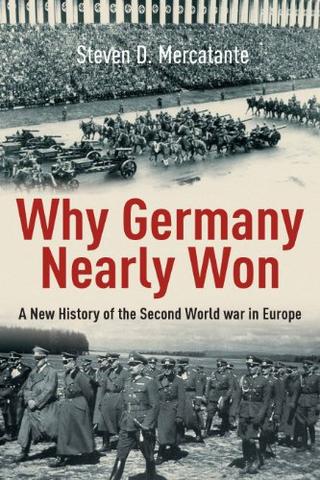

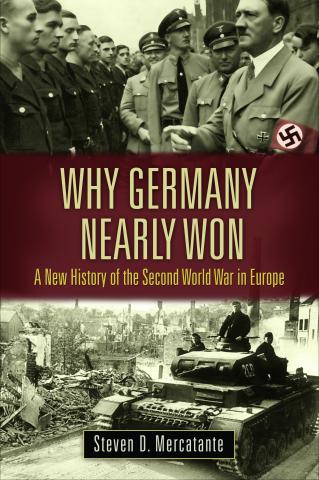
"Why Germany Nearly Won: A New History of the Second World War in Europe" is now available for purchase in the United Kingdom. 

You may order the book through Amazon UK, Casemate, Foyles, and Waterstones.

Lidice and Lezaky

on Sat, 06/09/2012 - 16:59

On May 27, 1942 a joint British, Czech, Slovak commando operation attacked Reinhard Heydrich, one of history's truly vile human beings he is best known as being the founder of the Sicherheitsdienst (SD) and chair of the January 1942 Wannsee Conference laying out the scope of the Final Solution, as he travelled near Prague in Czechoslovakia. He would die from his wounds shortly thereafter.

Then on June 9, 1942 Adolf Hitler, infuriated by Heydrich's assassination, set in train orders meant to make up for Heydrich's death by exacting horrific retribution on villages in the area that were

The Background Behind German Defensive Dispositions in France on the Eve of D-Day

on Wed, 06/06/2012 - 00:21

As we celebrate yet another anniversary of the tremendous Allied victory of June 6, 1944, or D-Day, let us take a closer look at the role played by German command decisions as one element in enabling the Allied establishment of a lodgment in France. From the beginning, Germany's approach to defending against an Allied liberation of Western Europe was overshadowed by the war waged in Eastern Europe. In particular an early focus of the Wehrmacht's defensive efforts revolved around preventing special operations conducted primarily by the British.

Seeking World War II Era Dowding System Operators

on Thu, 05/31/2012 - 16:11

Heads up everybody. The Association of Royal Air Force Fighter Control Officers is looking to get in touch with all operators, male or female, of the Royal Air Force's World War II era (1939-1945) warning system known as the "Dowding System" as follows:

“Working under the closest secrecy since 1939, over 4,000 Women’s Auxiliary Air Force (WAAF) personnel have played an important part in the air victories achieved by radiolocation (Radar). They tracked hostile and friendly aircraft, flying bombs and rockets, German E Boats and Allied Merchant vessels, and have guided British and Allied

Memorial Day 2012

on Mon, 05/28/2012 - 17:38

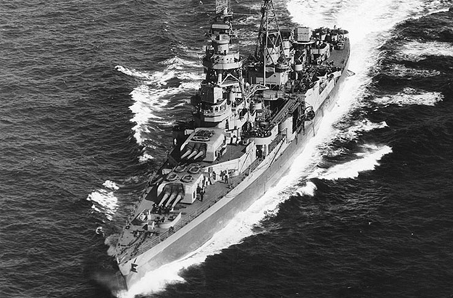
It is my hope that everybody in the United States is spending at least some time today thinking of the sacrifices made by our veterans over the two plus centuries of our nation's existence. In particular, and given this website's focus, I hope people take a moment to think of those who gave their lives during the Second World War - the last time this nation's independence and way of life has truly been threatened during an actual shooting war.

As such, and in special remembrance of our Second World War veterans, please find here a series of pictures of one of World War II's iconic ships; the

This Month in History: ULTRA's Big Break

on Wed, 05/23/2012 - 15:16

During World War II Nazi Germany primarily encoded its messages through the use of what was known as the "Enigma" machine. Enigma’s use by the Wehrmacht stretched back to the early 1930s and originated from a design created by Hugo Alexander Koch in the Netherlands.

Although heavily modified prior to the Second World War’s onset, the Enigma machines used in 1939-1945 remained similar to Koch’s prototypes from two decades prior. For a variety of reasons the Enigma machine was extraordinarily difficult to crack.

Pages